
10 Must-Have Platforms for Fleet Management and Tracking
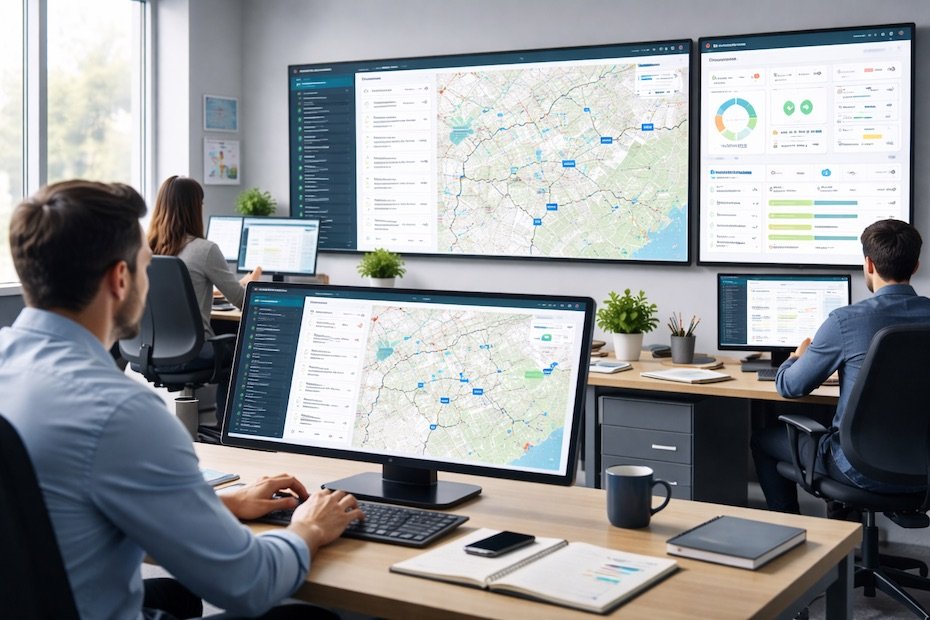
Table of Contents
- Why Fleet Management Platforms Now Sit at the Center of Operations
- What Actually Defines a High-Value Fleet Management Platform
- 1. Samsara – Unified Visibility Across Vehicles and Assets
- 2. Geotab – Deep Telematics and Custom Data Control
- 3. Verizon Connect – Operational Coordination at Scale
- 4. Fleetio – Asset Health and Maintenance Control
- 5. Azuga – Driver Behavior and Safety Performance
- 6. Teletrac Navman – Compliance-Driven Fleet Oversight
- 7. GPS Insight – Scalable Tracking for Expanding Fleets
- 8. NexTraq – Cloud-Based Fleet Monitoring
- 9. Motive – Safety and Risk Intelligence
- 10. GPSWOX – Cost-Efficient Global Tracking
- How to Select the Right Platform for Your Operation
- Which fleet management platforms are most effective?
- Build Operational Control That Holds Under Pressure
Fleet management platforms now function as operational control systems rather than basic tracking tools. When used correctly, they give you continuous visibility, faster coordination, and measurable control over cost, safety, and service execution across every moving asset.
This article breaks down ten essential fleet management and tracking platforms that support resilient, data-driven operations. You will see how each platform fits different operational models, what problems they solve in real conditions, and how to evaluate them based on execution needs rather than marketing claims.
Why Fleet Management Platforms Now Sit at the Center of Operations
Fleet operations have become more distributed, time-sensitive, and performance-driven. Relying on manual reporting, delayed GPS updates, or disconnected systems introduces risk that compounds across routes, drivers, and customers.
Modern fleet platforms centralize vehicle location, driver behavior, asset health, fuel usage, and dispatch coordination into a single operational layer. That consolidation shortens response time and allows teams to act on live conditions rather than yesterday’s reports.
The strongest platforms also integrate with logistics, finance, and maintenance systems, which eliminates reconciliation delays and creates shared operational clarity across departments.
What Actually Defines a High-Value Fleet Management Platform
Most buyers focus on feature lists, but execution quality depends on fit, reliability, and decision support. A high-value platform must deliver accurate live data, dependable hardware, and alerts that drive action rather than noise.
Core capabilities include continuous GPS tracking, automated maintenance scheduling, driver behavior monitoring, route performance visibility, and reporting that supports fast decisions. Platforms that overload dashboards without prioritization often slow teams down.
You should also evaluate mobile reliability, API access, data ownership, and vendor support depth. These factors determine whether the platform strengthens execution or becomes another system teams bypass under pressure.
1. Samsara – Unified Visibility Across Vehicles and Assets
Samsara delivers tightly integrated hardware and software designed for fleets that require high-resolution visibility across vehicles, trailers, and equipment.
Its real-time GPS, driver safety analytics, and video-based incident monitoring support proactive risk control rather than reactive investigation. Operations teams use Samsara to standardize safety and performance benchmarks across large, distributed fleets.
This platform fits organizations that require consistent execution across regions and asset types.
2. Geotab – Deep Telematics and Custom Data Control
Geotab is built for fleets that need granular vehicle diagnostics and flexible analytics. Its open ecosystem supports tailored reporting and integration with internal systems.
Geotab excels in long-term performance analysis, fuel efficiency monitoring, and driver behavior measurement. Public sector fleets and mixed-asset operators often rely on it to manage complexity without sacrificing control.
This platform suits teams with in-house analytics capability and complex reporting needs.
3. Verizon Connect – Operational Coordination at Scale
Verizon Connect provides GPS tracking, route optimization, dispatch tools, and compliance monitoring within a unified operational interface.
Service fleets and delivery operators use it to maintain schedule accuracy, reduce idle time, and improve on-time performance. The platform emphasizes operational clarity rather than excessive configuration.
It works well for organizations that value standardized workflows and predictable execution.
4. Fleetio – Asset Health and Maintenance Control
Fleetio focuses on preventive maintenance, inspections, work orders, and asset lifecycle tracking.
Fleetio helps teams move away from reactive repairs toward structured maintenance planning. By linking service history, fuel data, and inspection results, it reduces downtime and extends asset lifespan.
This platform is particularly valuable when uptime directly affects service delivery or revenue.
5. Azuga – Driver Behavior and Safety Performance
Azuga centers on driver behavior monitoring and safety scoring using live vehicle data.
Its feedback and scoring systems encourage safer driving patterns without heavy administrative overhead. Insurance-sensitive fleets often use Azuga to reduce risk exposure and standardize driver performance.
It fits operations where driver behavior directly influences cost and liability.
6. Teletrac Navman – Compliance-Driven Fleet Oversight
Teletrac Navman supports GPS tracking, inspection workflows, and regulatory compliance monitoring.
The platform provides real-time alerts for violations, maintenance issues, and route deviations. Fleets operating in regulated environments rely on it to maintain control without constant manual checks.
This solution suits organizations where compliance failures create operational disruption.
7. GPS Insight – Scalable Tracking for Expanding Fleets
GPS Insight offers GPS tracking, driver monitoring, and alerting designed for growing operations.
Its balance of usability and operational depth supports teams transitioning from basic tracking to structured fleet control. Managers value its responsive support and configurable alerts.
It fits mid-size fleets scaling routes, vehicles, or service areas.
8. NexTraq – Cloud-Based Fleet Monitoring
NexTraq provides real-time tracking, geofencing, and driver monitoring through a streamlined interface.
The platform emphasizes fast deployment and ease of use. Teams use it to gain immediate operational visibility without extensive onboarding.
It works well for service fleets that prioritize responsiveness and dispatch coordination.
9. Motive – Safety and Risk Intelligence
Motive integrates AI-assisted safety monitoring, dashcams, and compliance workflows.
Its incident detection and video analysis support faster resolution and clearer accountability. Fleets with high safety exposure use Motive to reduce preventable incidents and operational disruption.
This platform aligns with organizations focused on risk control and accountability.
10. GPSWOX – Cost-Efficient Global Tracking
GPSWOX delivers GPS tracking, route history, and asset monitoring across global operations.
Its broad device compatibility and competitive pricing make it accessible for smaller fleets and international operations. Teams use it to establish baseline visibility without heavy upfront investment.
It suits cost-conscious fleets that still require dependable tracking coverage.
How to Select the Right Platform for Your Operation
Choosing a platform requires clarity on your operational constraints. Safety exposure, maintenance downtime, fuel cost, route inefficiency, and compliance pressure should guide evaluation.
Shortlist platforms that align with your asset mix and operating model. Test reporting workflows using real operational scenarios to confirm usability under time pressure.
The right system supports execution discipline rather than adding complexity.
Which fleet management platforms are most effective?
- Samsara for enterprise visibility
- Geotab for advanced telematics
- Verizon Connect for route coordination
- Fleetio for maintenance control
Build Operational Control That Holds Under Pressure
Fleet management platforms now shape how reliably your organization executes day-to-day operations. When technology aligns with real workflows, performance becomes consistent rather than reactive. The platforms covered here support visibility, accountability, and control across vehicles, drivers, and assets. Selecting the right one depends on operational truth, not rankings or feature volume.
Related Posts

How to Build a Strong Resume as a Student With No Experience
Learn how to build a strong student resume with no experience...

How to Memorize Faster and Retain Information Longer
Learn how to memorize faster with active recall, spaced repetition, and...

How AI Is Changing Supply Chain Jobs (And What Skills Will Still Matter)
See how AI is changing supply chain jobs and which human...