
A Student’s Guide to Mastering the Art of Time Management
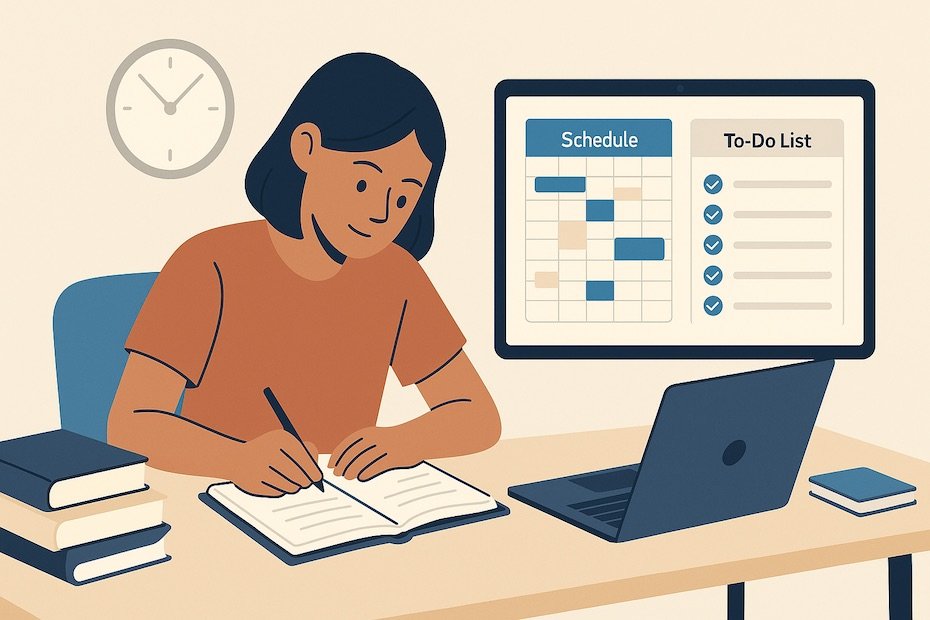
Table of Contents
- What is Time Management for Students?
- Why is Time Management Essential in Student Life?
- Set Clear and Specific Goals
- Build a Structured Schedule
- Prioritize Tasks the Right Way
- Defeat Procrastination
- Use Digital Tools to Stay Organized
- Balance Work, Rest, and Recovery
- Track and Adjust Regularly
- How Can Students Manage Time Better?
- In Conclusion
The best way to master time management as a student is to set clear priorities, build a structured schedule, and consistently track progress.
Your academic performance and well-being depend on how effectively you use your time. This guide offers practical strategies, real-world examples, and tools to help you take control of your day and maximize both study and rest.
What is Time Management for Students?
Time management for students means planning and controlling how much time you spend on tasks to improve efficiency and results.
Without it, you risk missing deadlines, lowering performance, and creating stress. With it, you increase productivity, maintain balance, and reduce wasted effort.
You should think of time management as a habit that strengthens through consistent practice. The more disciplined your planning, the easier it becomes to manage complex schedules.
Why is Time Management Essential in Student Life?
Time management is essential because it ensures deadlines are met, stress is reduced, and you can balance academics with personal life.
Students with strong time management often see better grades, healthier lifestyles, and improved confidence. It helps you perform consistently without overworking.
It’s also an important skill beyond education. Employers and organizations value individuals who can prioritize, meet targets, and adapt quickly when plans change.
Set Clear and Specific Goals
You need goals that are specific, measurable, and achievable.
Avoid vague objectives like “study math.” Instead, set goals such as “complete five algebra problems in 30 minutes.” Clear targets keep you focused and accountable.
Write your goals daily and track completion. When you quantify progress, you build momentum and prevent procrastination.
Build a Structured Schedule
A structured schedule gives your day direction and prevents wasted time.
Use digital calendars or planners to map study hours, breaks, meals, and downtime. Make sure you leave buffer time for unexpected changes.
Your schedule must reflect balance. Overloading yourself creates fatigue and reduces quality. A sustainable plan supports productivity without draining energy.
Prioritize Tasks the Right Way
Not all tasks deserve equal time or attention.
Use prioritization techniques like the Eisenhower Matrix to separate urgent and important tasks from less critical ones. Focus on high-value activities first.
By focusing on critical deadlines before secondary tasks, you ensure consistent progress and reduce last-minute stress.
Ways to prioritize effectively:
- Identify tasks with the biggest impact on grades.
- Handle demanding work during peak energy hours.
- Reevaluate priorities at the end of each day.
Defeat Procrastination
Procrastination is the most common time management barrier for students.
Recognize triggers—like scrolling social media or studying in a noisy environment—and eliminate them. Set boundaries by creating distraction-free study zones.
The Pomodoro Technique is one proven method. Work for 25 minutes, rest for 5, then repeat. After four cycles, take a longer break. This keeps your focus sharp.
Use Digital Tools to Stay Organized
Technology can strengthen your time management if used correctly.
Apps like Google Calendar, Notion, and Todoist help you plan daily tasks and set reminders. Time-tracking apps like RescueTime show you how you actually spend hours online.
You can also batch similar tasks together. Grouping activities like reviewing notes, replying to emails, or solving practice problems saves mental energy.
Balance Work, Rest, and Recovery
Time management is not about doing more, but about doing what matters with balance.
Build breaks into your schedule. Regular rest improves memory retention, attention, and energy. Neglecting recovery only leads to burnout.
Ensure your routine includes sleep, nutrition, and physical activity. A healthy body and mind enable sharper focus and stronger performance.
Track and Adjust Regularly
Great time management systems adapt with your needs.
Review your schedule at the end of each week. Were your goals realistic? Which activities consistently got postponed? Use these insights to refine your system.
Flexibility is key. What works during finals may not work during regular classes. Evaluate, adjust, and improve as you grow.
How Can Students Manage Time Better?
- Set specific daily goals
- Create structured schedules
- Prioritize important tasks
- Eliminate procrastination
- Use digital tools wisely
- Balance study with rest
- Review and adjust regularly
In Conclusion
Mastering time management as a student requires clarity, consistency, and adaptability. When you plan effectively, prioritize correctly, and balance work with rest, you set yourself up for academic excellence and personal growth.
If you want more proven strategies for success, connect with me here: my greenscreens.ai
Related Posts

How to Build a Strong Resume as a Student With No Experience
Learn how to build a strong student resume with no experience...

How to Memorize Faster and Retain Information Longer
Learn how to memorize faster with active recall, spaced repetition, and...

How AI Is Changing Supply Chain Jobs (And What Skills Will Still Matter)
See how AI is changing supply chain jobs and which human...