
The Benefits of Learning Through Play: Is It Effective?
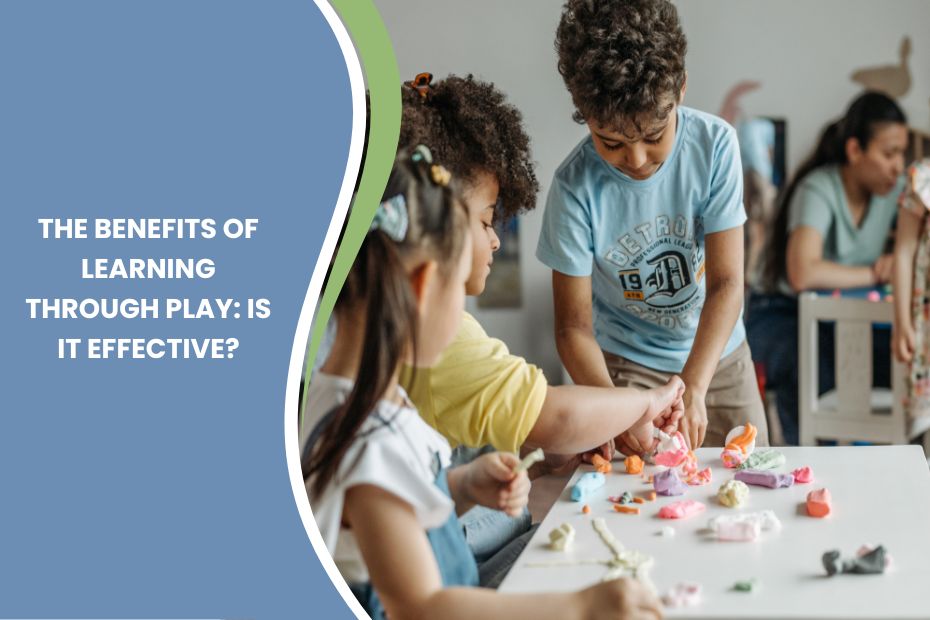
Table of Contents
- Strengthening Cognitive Development Through Play
- Enhancing Language and Communication Skills
- Building Social and Emotional Skills
- Encouraging Creativity and Imagination
- Improving Physical Development and Coordination
- Boosting Engagement and Motivation in Learning
- Helping Students Develop Resilience and Adaptability
- Making Play an Essential Part of Education
- Key Benefits of Learning Through Play
- In Conclusion
Traditional education often emphasizes structured lessons, but learning doesn’t always have to follow a rigid format. I’ve seen firsthand how play transforms education from a routine into something exciting and meaningful. Whether it’s a child solving a puzzle, acting out a historical event, or experimenting with building blocks, play creates a natural learning environment where curiosity thrives. When play is used as an educational tool, students develop problem-solving skills, resilience, and creativity without even realizing they are “learning.” The key is to integrate play in a way that keeps students engaged while reinforcing valuable academic and life skills.
Strengthening Cognitive Development Through Play
Play isn’t just about fun—it’s a powerful cognitive tool. I’ve watched students grasp difficult concepts much faster when they’re actively involved rather than just memorizing information. A simple game of building with blocks teaches spatial awareness, problem-solving, and early math skills. Even role-playing games, where students act as shopkeepers or scientists, introduce them to real-world problem-solving in an engaging way.
One of the most impressive aspects of play-based learning is how it encourages children to think critically. When they’re given the freedom to explore, they naturally start making connections between ideas. For example, when children engage in pretend play, they test theories, try out different solutions, and adjust their thinking when something doesn’t work—just like scientists conducting experiments. This kind of hands-on engagement cements knowledge in a way traditional instruction often fails to achieve.
Enhancing Language and Communication Skills
Play creates an environment where language skills develop naturally. I’ve seen students who were shy in traditional lessons become confident speakers when given a playful setting to express themselves. Whether it’s through storytelling, role-playing, or interactive group games, play helps children expand their vocabulary and improve their ability to articulate thoughts.
A child engaged in a pretend restaurant game, for instance, learns to describe orders, negotiate with “customers,” and even read menus. In group activities, students negotiate rules, explain ideas, and listen to others’ perspectives. This interactive approach fosters confidence in communication, making children more expressive and better prepared for real-world conversations.
Building Social and Emotional Skills
Play isn’t just about individual learning—it’s a social experience. I’ve worked with students who initially struggled with teamwork, but after engaging in cooperative play, they learned to share, take turns, and support one another. Games that involve group decision-making teach patience and conflict resolution, both of which are crucial for personal and professional relationships later in life.
Through play, children also learn how to handle emotions. Whether it’s dealing with the frustration of losing a game or the excitement of solving a puzzle, these experiences teach emotional regulation. Play provides a safe space to explore feelings, and with proper guidance, students learn to manage setbacks and keep going—a skill that benefits them far beyond the classroom.
Encouraging Creativity and Imagination
Creativity flourishes when learning feels open-ended. I’ve seen students come up with incredibly inventive solutions when they’re given the chance to experiment without the fear of getting something “wrong.” Whether they’re drawing, building, acting, or storytelling, play gives children the freedom to express ideas in unique ways.
I remember watching a group of students turn a pile of cardboard into an entire city, complete with roads, bridges, and tiny paper citizens. That wasn’t just creativity—it was problem-solving, spatial reasoning, and teamwork all wrapped into one playful experience. Play allows children to push boundaries and think outside conventional limits, a skill that benefits them well beyond childhood.
Improving Physical Development and Coordination
Movement-based learning is one of the most overlooked benefits of play. I’ve noticed that when students engage in physical play, they become more focused and alert in other areas of learning. Activities like running, climbing, and balancing improve motor skills and coordination, but they also have cognitive benefits. Studies show that children who move more tend to retain information better and stay engaged longer.
Even small physical movements, like clapping along to a rhythm or using hand gestures to count, reinforce learning in a way that sitting still never could. Schools that integrate movement-based play—whether through dance, interactive storytelling, or outdoor exploration—see better student participation and improved concentration.
Boosting Engagement and Motivation in Learning
One of the biggest advantages of play-based learning is that students don’t even realize they’re learning. I’ve seen reluctant students suddenly light up when math problems are introduced in the form of a treasure hunt or when science lessons turn into hands-on experiments. When play is part of the lesson, motivation skyrockets.
Game-based learning, in particular, has been a game-changer (literally). Whether it’s educational board games, online learning apps, or interactive classroom competitions, making learning feel like a challenge rather than an obligation keeps students engaged. I’ve watched students work through difficult subjects simply because the learning process was enjoyable.
Helping Students Develop Resilience and Adaptability
Resilience is one of the most valuable skills students can develop, and play teaches it naturally. When children lose a game, struggle with a tricky puzzle, or experiment with an idea that doesn’t work, they learn how to adapt and keep trying. I’ve worked with students who once avoided difficult tasks but, after being introduced to structured play, became more willing to take on challenges.
Board games teach patience and strategic thinking, while role-playing helps students practice different outcomes for real-life situations. Even something as simple as building a tower of blocks and watching it fall teaches resilience—children quickly learn to adjust their strategies and try again. These moments help develop a mindset that sees failure as part of growth, rather than something to fear.
Making Play an Essential Part of Education
The most successful classrooms I’ve worked with don’t see play as an “extra”—they integrate it into the core learning process. Some of the most effective ways to bring play into education include:
- Creating learning stations – Small areas for hands-on activities like science experiments, building challenges, and creative play.
- Using role-playing scenarios – Acting out historical events, playing market-based games for math lessons, or using puppetry for storytelling.
- Incorporating outdoor learning – Taking lessons outside for real-world applications, whether it’s exploring nature for biology or measuring playground angles for math.
- Introducing game-based challenges – Turning lessons into interactive problem-solving activities that encourage participation.
Play-based education isn’t about replacing traditional learning but enhancing it. When used intentionally, it fosters engagement, curiosity, and deeper comprehension across all subjects.
Key Benefits of Learning Through Play
- Strengthens problem-solving – Encourages critical thinking and adaptability.
- Enhances communication – Develops language and social skills.
- Supports emotional growth – Builds confidence and resilience.
- Boosts creativity – Encourages exploration and innovation.
- Improves focus and motivation – Makes learning enjoyable and engaging.
In Conclusion
Learning through play isn’t just effective—it’s essential. When students engage in playful learning, they absorb concepts naturally, build resilience, and develop essential life skills in the process. Schools that embrace play as a fundamental part of education create environments where curiosity thrives and where students become lifelong learners. The benefits extend far beyond childhood, shaping confident, adaptable individuals who are prepared for whatever challenges come their way. Play isn’t a distraction from learning—it’s one of the best ways to make learning stick.
For more insights on education, innovation, and growth strategies, check out my latest thoughts on Substack. Let’s explore the power of learning through play!
Related Posts
How to Build a Strong Resume as a Student With No Experience
Learn how to build a strong student resume with no experience...

How to Memorize Faster and Retain Information Longer
Learn how to memorize faster with active recall, spaced repetition, and...

How AI Is Changing Supply Chain Jobs (And What Skills Will Still Matter)
See how AI is changing supply chain jobs and which human...