
The Role of Technology in Special Education: Is It a Game Changer?
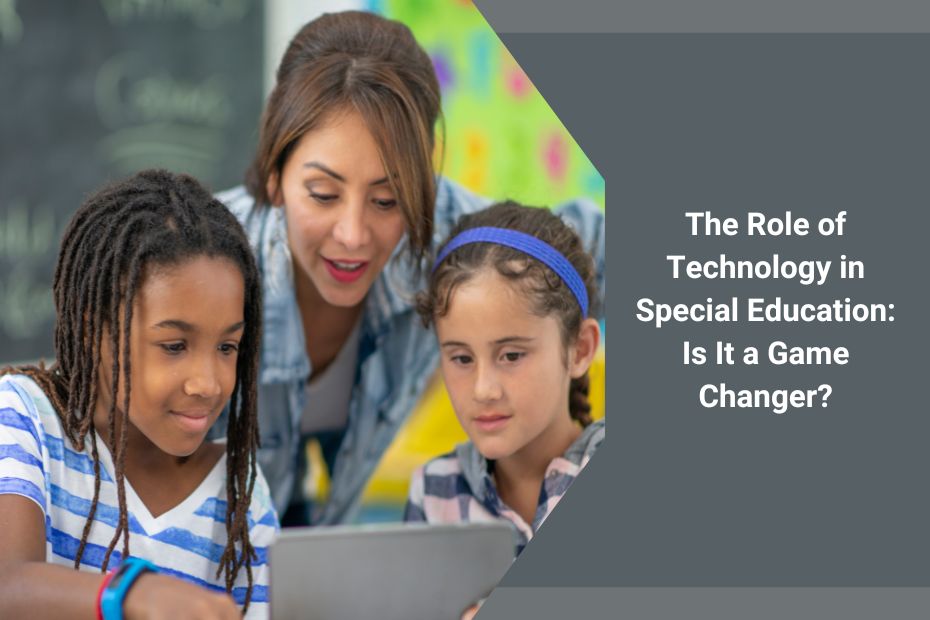
Table of Contents
- Technology Opens Access Where It Wasn’t Possible Before
- Independence Is No Longer an Abstract Goal
- Communication Tools Are Expanding How Students Express Themselves
- Personalized Learning Is More Than a Buzzword
- Engagement Isn’t a Bonus—It’s Essential
- It Supports Social Skills and Collaborative Learning
- Skill Development Becomes Practical and Measurable
- Benefits of Technology in Special Education
- In Conclusion
Special education has never been a one-size-fits-all model, and the integration of technology into this field has reinforced that truth in powerful ways. I’ve worked alongside educators, specialists, and technologists who are reshaping how students with disabilities learn and communicate. What was once limited by physical resources or staffing constraints is now being expanded through smart, adaptive, and inclusive technologies. Whether it’s a student who gains access to reading through a screen reader or another who expresses thoughts with the help of a speech-generating device, we’re witnessing how the right tools can remove long-standing barriers. The shift isn’t just about improving access; it’s about unlocking potential. Throughout this article, I’ll break down exactly how technology is enhancing learning, building independence, and giving students more voice and agency in their education.
Technology Opens Access Where It Wasn’t Possible Before
Accessibility is the foundation of effective special education. Without it, students are left behind no matter how talented or motivated they are. That’s where technology makes an immediate difference. I’ve seen screen readers turn dense text into spoken word, allowing students with visual impairments or dyslexia to navigate textbooks, websites, and assignments on their own. Tools like Read&Write, JAWS, and VoiceOver aren’t just add-ons—they’re lifelines for students who otherwise struggle to access the same content as their peers.
The same goes for captioning tools, keyboard alternatives, and customizable display settings. These features give students the freedom to choose how they interact with material. And when students have that choice, their confidence grows. Accessibility tech isn’t just about accommodation—it’s about creating equality in how students experience and absorb knowledge.
Independence Is No Longer an Abstract Goal
Independence is a key objective in any special education plan. With assistive technology, that goal becomes more realistic. Speech-to-text programs like Dragon NaturallySpeaking help students write without needing to physically type. Smartpens can capture audio while students write notes and replay it later, which helps with memory and comprehension.
Even tools that seem small—like task management apps or visual schedules—can be transformative. For a student who struggles with executive functioning, something like Choiceworks or Time Timer can structure their day in a way that’s both predictable and empowering. These aren’t shortcuts—they’re systems that teach responsibility and build habits that extend beyond the classroom.
Communication Tools Are Expanding How Students Express Themselves
Communication challenges are some of the most frustrating for students and teachers alike. Technology has changed the game here more than anywhere else. Augmentative and alternative communication (AAC) devices allow nonverbal or minimally verbal students to participate fully in discussions, lessons, and social settings. Apps like Proloquo2Go or Snap + Core First give students a digital voice that’s fast, flexible, and tailored to their needs.
This doesn’t just support academics—it opens up relationships. Students can answer questions, joke with friends, and share their ideas in ways that were previously inaccessible. When students are given a voice, even through a device, it changes how they see themselves—and how others see them too. That shift in perception is as important as any skill they learn.
Personalized Learning Is More Than a Buzzword
Every student with an IEP or 504 plan has unique goals, and generic lessons rarely meet those needs. Technology gives teachers the tools to personalize instruction in real time. Adaptive platforms like DreamBox or IXL adjust the difficulty level based on student performance. This means that students are always working in their zone—not too easy, not too hard.
There are also tools that allow students to choose the format they prefer—visual, auditory, kinesthetic—so they can engage with material in a way that aligns with their strengths. Whether it’s building a math concept through interactive games or reinforcing vocabulary with voice recordings, the flexibility technology provides helps students make progress at their own pace without constant redirection or frustration.
Engagement Isn’t a Bonus—It’s Essential
Students with special needs often require more support to stay engaged, and technology helps bridge that gap. I’ve seen students light up when working in apps that use animation, feedback, or gamification. These aren’t distractions—they’re engagement tools that reinforce learning and sustain attention.
Tools like BrainPOP, EdPuzzle, and even VR-based platforms introduce content in ways that are dynamic and multi-sensory. That’s especially important for students with ADHD, autism, or processing disorders. Engagement matters because attention is a prerequisite to retention. If a student isn’t tuned in, they’re not going to learn—no matter how good the curriculum is. Technology doesn’t guarantee engagement, but it certainly makes it easier to achieve and maintain.
It Supports Social Skills and Collaborative Learning
One misconception I often hear is that technology isolates students. That only happens when it’s used passively. When applied intentionally, tech can bring students together. Platforms like Flip, Google Meet, or even Minecraft Education Edition give students a structured way to collaborate, share, and communicate with peers.
For students working on social goals—eye contact, turn-taking, initiating conversation—digital environments offer a safe place to practice. I’ve used tools where students role-play social scenarios or work on shared documents to complete a group assignment. Technology becomes the connector, not the divider, when it’s used to create shared tasks and shared outcomes.
Skill Development Becomes Practical and Measurable
Beyond access and communication, technology supports the direct development of skills. Writing tools like Grammarly or Co:Writer help students improve sentence structure, spelling, and clarity. Reading apps with built-in dictionaries or voice support build vocabulary and fluency. Math apps break down concepts step-by-step, offering support where it’s needed most.
These tools also offer data—something that helps teachers track progress without spending hours on paperwork. Many platforms provide reports on usage, accuracy, and mastery, which can be used to adjust instruction or support IEP goals. Technology doesn’t replace skill-building—it scaffolds it, making it easier to teach and easier to learn.
Benefits of Technology in Special Education
- Supports access with screen readers and captioning
- Promotes independence through voice and scheduling tools
- Enables communication with AAC devices
- Personalizes learning through adaptive platforms
- Increases engagement with interactive content
- Builds social skills in shared environments
- Tracks skill growth with smart feedback tools
In Conclusion
Technology is not a silver bullet, but in special education, it’s far more than a convenience—it’s a lifeline. It removes physical and cognitive barriers, opens new channels of communication, and gives students the tools to thrive in a system that hasn’t always served them well. The value isn’t just in the features, but in the freedom it creates: freedom to learn in different ways, to communicate without fear, and to move at a pace that builds real mastery. When applied with intention, technology becomes a partner in education that truly changes outcomes. That’s why I consider it a game changer—not because it solves everything, but because it helps students show everything they’re capable of.
In this insightful article, Benjamin Gordon on Spotify Podcasts explores the transformative role of technology in special education, emphasizing its power to improve accessibility, independence, communication, and engagement for students with disabilities.
Related Posts
How to Build a Strong Resume as a Student With No Experience
Learn how to build a strong student resume with no experience...

How to Memorize Faster and Retain Information Longer
Learn how to memorize faster with active recall, spaced repetition, and...

How AI Is Changing Supply Chain Jobs (And What Skills Will Still Matter)
See how AI is changing supply chain jobs and which human...