What Are the Advantages of Bilingual Education?
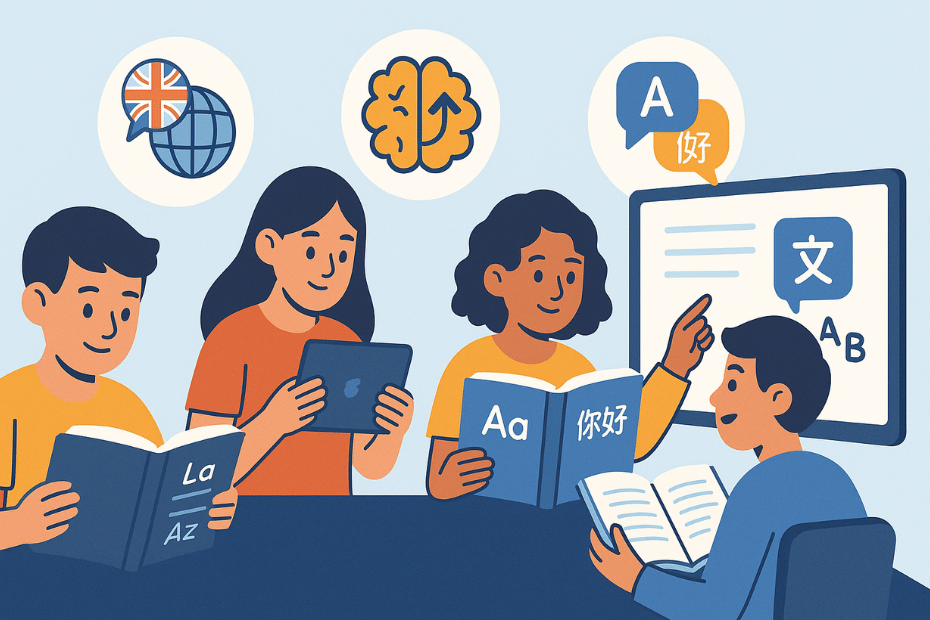
Table of Contents
- Stronger Cognitive Skills Through Language Switching
- Improved Academic Performance Across Core Subjects
- Cultural Understanding Becomes Second Nature
- Economic Advantages in a Global Workforce
- Communication Skills Get a Practical Upgrade
- A Stronger Connection to Family and Community
- Long-Term Brain Health Benefits
- Real-Life Problem Solving and Creativity
- What Bilingual Education Really Offers
- In Conclusion
If you’re considering bilingual education as part of your teaching strategy or your child’s academic journey, you’re looking at one of the most well-rounded investments in learning today. Bilingual education isn’t just about learning two languages—it shapes how students think, interact, and prepare for a globally connected world. From cognitive improvements and academic performance to career benefits and cultural understanding, the advantages go far beyond language fluency. This article unpacks the wide-ranging benefits of bilingual education and how it supports lifelong success in the classroom and beyond.
Stronger Cognitive Skills Through Language Switching
When students work between two languages, they constantly switch cognitive gears. This regular exercise builds mental flexibility and strengthens executive function skills. These include task switching, focus control, and working memory. If you’re teaching bilingual students, you’ll notice they often show better problem-solving abilities and longer attention spans than monolingual peers.
In bilingual classrooms, the process of navigating two grammatical systems and vocabulary sets forces students to think critically about structure and meaning. Over time, this trains the brain to analyze, compare, and organize information more effectively. The benefits are especially pronounced in early learners, but adults gain too—so it’s never too late to introduce bilingual instruction.
Improved Academic Performance Across Core Subjects
You might expect that managing two languages would be distracting, but the opposite tends to be true. Students in bilingual programs regularly perform better in subjects like math, reading, and science. That’s because bilingual education strengthens foundational skills—like memory, attention, and reasoning—that are essential across disciplines.
When students learn to compare content in both languages, they often develop a deeper understanding of the material. Translating complex topics reinforces comprehension. And since bilingual learners are used to encountering new ideas through more than one linguistic lens, they become comfortable tackling difficult material and explaining it in different ways.
Cultural Understanding Becomes Second Nature
In a world where communication and empathy are essential, bilingual education gives your students a major advantage. They aren’t just learning words; they’re gaining access to new cultural systems, values, and ways of thinking. This exposure naturally builds respect for diversity and helps them interact meaningfully across communities.
By studying history, literature, or current events in multiple languages, students gain firsthand awareness of how different cultures approach problems or express ideas. They develop curiosity rather than bias. In group settings, they tend to show higher emotional intelligence and adapt more easily to mixed-language environments—whether that’s in a local classroom or an international workplace.
Economic Advantages in a Global Workforce
If you’re helping students prepare for their careers, bilingual education adds a serious boost. Employers in nearly every sector—healthcare, business, law, tech, and customer service—seek workers who can speak more than one language. Bilingual employees are more likely to qualify for international roles and cross-cultural teams, and research shows they can earn more on average.
But the benefits aren’t limited to formal roles. Entrepreneurs who speak multiple languages can expand their customer base and build relationships in international markets without relying on translators. And in fields like diplomacy, sales, or journalism, being bilingual often isn’t a bonus—it’s a baseline expectation.
Communication Skills Get a Practical Upgrade
When students become fluent in two languages, their overall communication skills tend to improve—even in their first language. That’s because they get regular practice in paraphrasing, clarifying, and listening closely. You’ll see students become more thoughtful in how they ask questions and how they explain themselves.
They’re also better at tailoring their language to different situations. That means they pick up on tone, register, and cultural expectations more quickly than monolingual students. These skills are useful far beyond the classroom—whether they’re giving presentations, conducting interviews, or resolving conflicts in team settings.
A Stronger Connection to Family and Community
If your students speak a heritage language at home, bilingual education gives them the tools to retain that connection. Instead of being forced to choose between languages, they grow up seeing both as valuable. That fosters confidence, pride, and belonging—especially in immigrant or multilingual families.
Preserving a home language allows students to communicate with relatives, participate in cultural traditions, and maintain their sense of identity. Over time, this leads to stronger family ties and community involvement. And it ensures that students don’t lose important parts of themselves in the process of learning a dominant language.
Long-Term Brain Health Benefits
One of the most interesting findings about bilingualism is its link to brain health later in life. Research shows that people who speak more than one language regularly may delay the onset of cognitive decline and reduce the risk of conditions like dementia. The mental agility developed through language switching continues to support memory and reasoning well into old age.
For students, this is another reason to keep practicing and applying their bilingual skills throughout life. Bilingual education isn’t just a short-term academic strategy—it’s an investment in mental fitness that pays off over decades.
Real-Life Problem Solving and Creativity
Because bilingual students learn to express the same idea in more than one way, they often become more creative thinkers. They get used to exploring multiple interpretations, brainstorming different solutions, and adapting to their audience. That flexibility helps them in everything from writing assignments to science experiments to group projects.
Problem-solving in a bilingual setting teaches students to approach questions from different angles. They become comfortable thinking abstractly and finding workarounds when they hit a wall. These traits are especially valuable in careers that require innovation, strategy, or design thinking.
What Bilingual Education Really Offers
- Improves memory, focus, and problem-solving
- Boosts achievement in reading, math, and science
- Encourages cultural awareness and empathy
- Opens doors to high-paying global careers
- Strengthens identity and community connection
In Conclusion
Bilingual education gives your students far more than just a second language. It builds brains, opens doors, and strengthens relationships. From higher test scores to better job offers to lifelong mental agility, the benefits touch every part of their development. As a teacher, parent, or policymaker, supporting bilingual education means preparing students not just to succeed in school—but to thrive in a world that demands flexibility, understanding, and global thinking.
For more insights on global education, multilingual learning, and cognitive development, follow Ben Gordon on SoundCloud for thoughtful perspectives that connect language with lifelong success.
Related Posts

How to Build a Strong Resume as a Student With No Experience
Learn how to build a strong student resume with no experience...

How to Memorize Faster and Retain Information Longer
Learn how to memorize faster with active recall, spaced repetition, and...

How AI Is Changing Supply Chain Jobs (And What Skills Will Still Matter)
See how AI is changing supply chain jobs and which human...